Why working prototypes fail at ten thousand units
A prototype proves the idea. Volume proves the supply chain, the tooling and the test coverage — three things a prototype never touches.
A working prototype is a genuine milestone and a misleading one. It proves the idea functions. It proves almost nothing about whether the idea can be made ten thousand times, at a price, by people who did not build the first one.
The gap between those two things is where a large share of hardware projects quietly die — usually not in a dramatic failure, but in a slow accumulation of small problems that nobody budgeted for.
What a prototype never tests
A prototype is typically built by the person who designed it, from parts they selected, with a soldering iron nearby. Volume production has none of those advantages.
- Tolerance stack-up: the prototype fitted because the parts happened to land in the middle of their tolerance bands. At volume they will not.
- Component variation: a part that works at its typical value may not at the extremes of its specification.
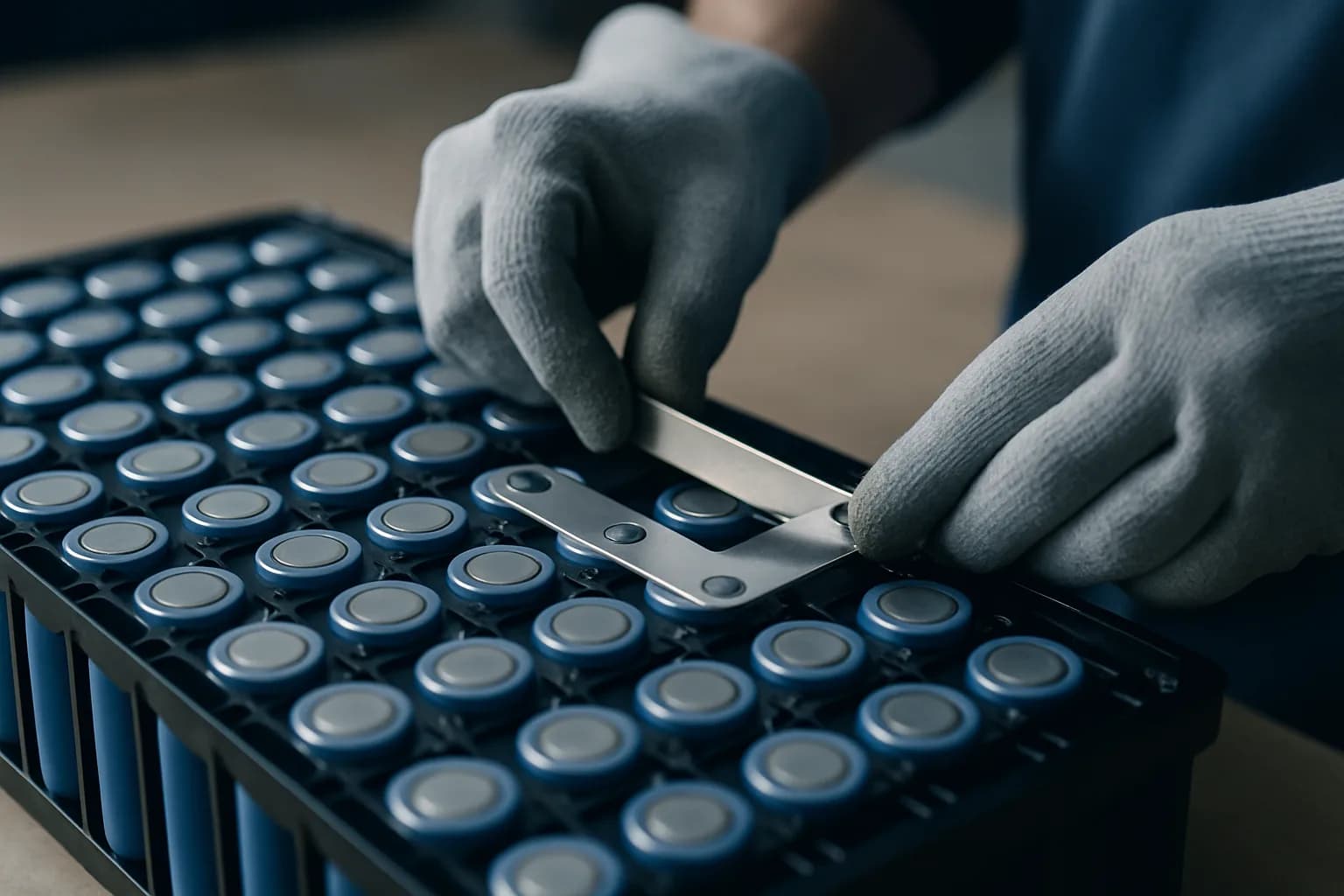
- Assembly by someone else: if a step can be done wrong, at volume it eventually will be. The design has to make it hard.
- Test coverage: every unit needs a test that a non-engineer can run in seconds and that catches the failures that actually occur.
- Supply: the part in the prototype needs a second source, or it becomes a single point of failure for the product's whole life.
Design for manufacture is not a review
Design for manufacture is often treated as a checkpoint — a document somebody signs before release. Done that way it arrives too late to change anything of consequence.
It works better as a constraint carried from the beginning. Part count is a cost. Fasteners are assembly time. A housing that needs an operator to hold two parts together while fitting a third is a housing that will be assembled wrongly at some point. These are design decisions, and they are cheapest in the first month.
The pilot run earns its cost
Between the prototype and the production run sits a pilot: a small batch built on production tooling, by production people, using the production test. Its purpose is not to make units to sell. It is to find out what the process gets wrong before the process is running at full speed.
Teams under time pressure skip it. It is almost always the most expensive corner they cut, because everything it would have found is still there — just discovered later, in larger quantities.
Working on something like this?
We design and manufacture hardware end to end. The first call is with an engineer and costs nothing.